

China Vehicle Supplier at Lagos Expo 2026 | ZW Group
THE 19TH CHINA COMMODITIES EXPO · NIGERIA LAGOS
How Can a China Vehicle Supplier Help Nigerian Buyers Source Trucks and Semi-Trailers?
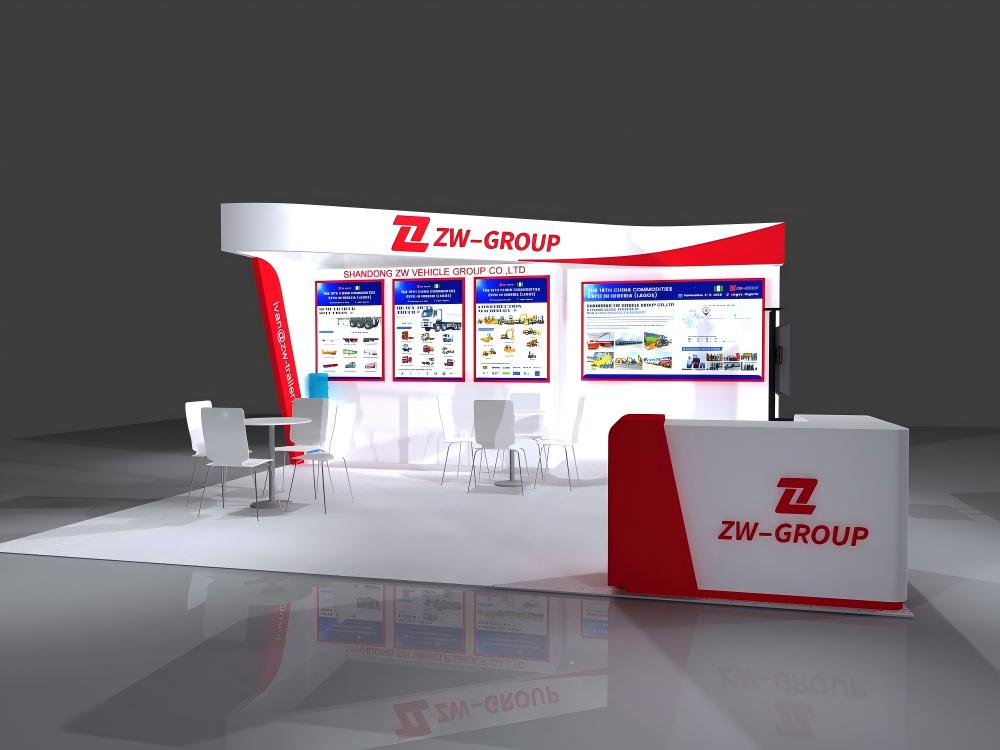
Meet ZW Group at Booth 1A01, Landmark Centre, Lagos, from November 3–5, 2026. Discuss commercial vehicles, semi-trailers, construction machinery, and new or used vehicle procurement with our team.
For Nigerian importers, fleet operators, construction contractors, mining businesses, and regional distributors, choosing a China vehicle supplier involves more than comparing purchase prices. Vehicle configuration, operating conditions, export arrangements, spare parts, and long-term serviceability all influence the actual cost of ownership.
ZW Group connects Chinese vehicle manufacturing resources with overseas commercial requirements. At the Lagos exhibition, visitors can discuss equipment selection, fleet procurement, project requirements, and potential long-term supply cooperation.
What Are the Key Details of the 2026 Lagos China Commodities Expo?
Visit ZW Group at Booth 1A01 to discuss vehicle specifications and export purchasing requirements directly with our team. Advance contact helps us prepare for more focused business discussions.
| Event Detail | Information |
|---|---|
| Exhibition | The 19th China Commodities Expo Nigeria Lagos |
| Dates | November 3–5, 2026 |
| Venue | Landmark Centre, Lagos, Nigeria |
| ZW Group Booth | 1A01 |
| Product Scope | Semi-trailers, heavy trucks, new and used vehicles, construction machinery, and related procurement solutions |
| Contact | WhatsApp: +86 185 6091 3665 |
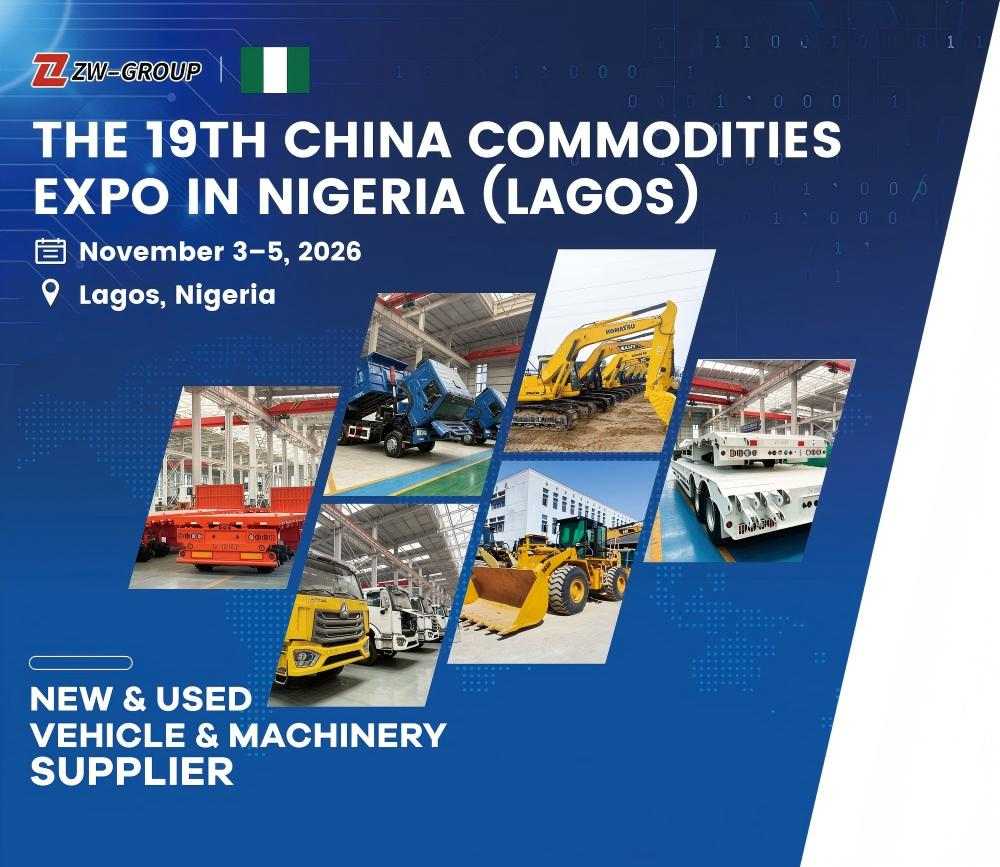
Exhibition image placeholder: replace with the confirmed ZW Group booth or event promotional image.
Lagos is an important commercial centre for Nigerian imports, distribution, industrial activity, and regional trade. Buyers from across Nigeria and neighbouring West African markets can use the exhibition to establish direct supplier contacts and discuss their actual operating requirements.
A face-to-face meeting can also help clarify details that are easily overlooked in a short online inquiry. These include axle configuration, payload requirements, intended road conditions, truck powertrain options, delivery arrangements, and the availability of suitable replacement parts.
Why Should Nigerian Buyers Meet a China Vehicle Supplier in Person?
The most useful supplier meeting starts with the buyer’s operating conditions, not a generic price list. A vehicle must suit its intended workload, road environment, maintenance resources, and expected operating life.
For a fleet operator, the wrong specification can increase fuel consumption, tyre wear, maintenance downtime, and repair costs. For an importer or distributor, an unsuitable configuration can make inventory harder to sell and after-sales support more complicated. For a contractor, poor equipment matching can disrupt an entire project schedule.
ZW Group welcomes discussions with buyers who need to evaluate:
- Vehicle types and technical specifications for specific applications.
- New versus used heavy-truck procurement options.
- Trailer dimensions, axle arrangements, suspension systems, and load requirements.
- Engine, transmission, braking, and drivetrain options where applicable.
- Spare parts planning and maintenance considerations.
- Export documentation, shipping arrangements, and destination-port requirements.
- Single-unit purchases, fleet orders, and distributor supply opportunities.
A capable China vehicle supplier should be prepared to ask practical questions before recommending a configuration. What cargo will the vehicle carry? How far will it travel each day? Will it operate on paved highways, construction access roads, or mining routes? What maintenance facilities and replacement parts are available locally?
These answers provide a better basis for evaluating suitable vehicles than horsepower or purchase price alone.
WhatsApp ZW Group before the exhibition to arrange a focused discussion.
What Semi-Trailers Can Buyers Discuss with ZW Group?
ZW Group offers access to multiple semi-trailer categories for freight transportation, container logistics, construction, and industrial applications. The appropriate model depends on cargo dimensions, loading methods, route conditions, axle loads, and applicable local regulations.
| Trailer Type | Typical Application | Specification Points to Confirm |
|---|---|---|
| Flatbed Semi-Trailer | Steel products, building materials, machinery, and general cargo | Deck dimensions, payload, axle layout, loading access, and lashing points |
| Lowbed Semi-Trailer | Excavators, loaders, bulldozers, and other heavy equipment | Platform height, loading ramps, axle capacity, turning clearance, and cargo dimensions |
| Dump Semi-Trailer | Sand, aggregate, earth, and bulk construction materials | Body volume, steel thickness, hydraulic hoist, tipping angle, and chassis design |
| Fence Cargo Semi-Trailer | Bagged cargo, agricultural goods, packaged materials, and mixed freight | Fence height, post arrangement, deck structure, and load securing |
| Sidewall Semi-Trailer | General cargo requiring side protection | Sidewall height, removable panels, payload, and loading requirements |
| Fuel Tank Semi-Trailer | Bulk liquid transport where permitted | Tank material, compartments, valves, safety equipment, and applicable certification |
| Skeleton Container Trailer | Shipping-container transport between ports, depots, and inland destinations | Container compatibility, twist locks, chassis dimensions, and axle loading |
| Cement Bulker Semi-Trailer | Dry cement and other compatible powdered bulk materials | Tank capacity, discharge arrangement, compressor requirements, and material compatibility |
| Car Carrier Semi-Trailer | Transport of passenger cars and compatible light vehicles | Vehicle capacity, loading geometry, ramps, restraint points, and overall dimensions |
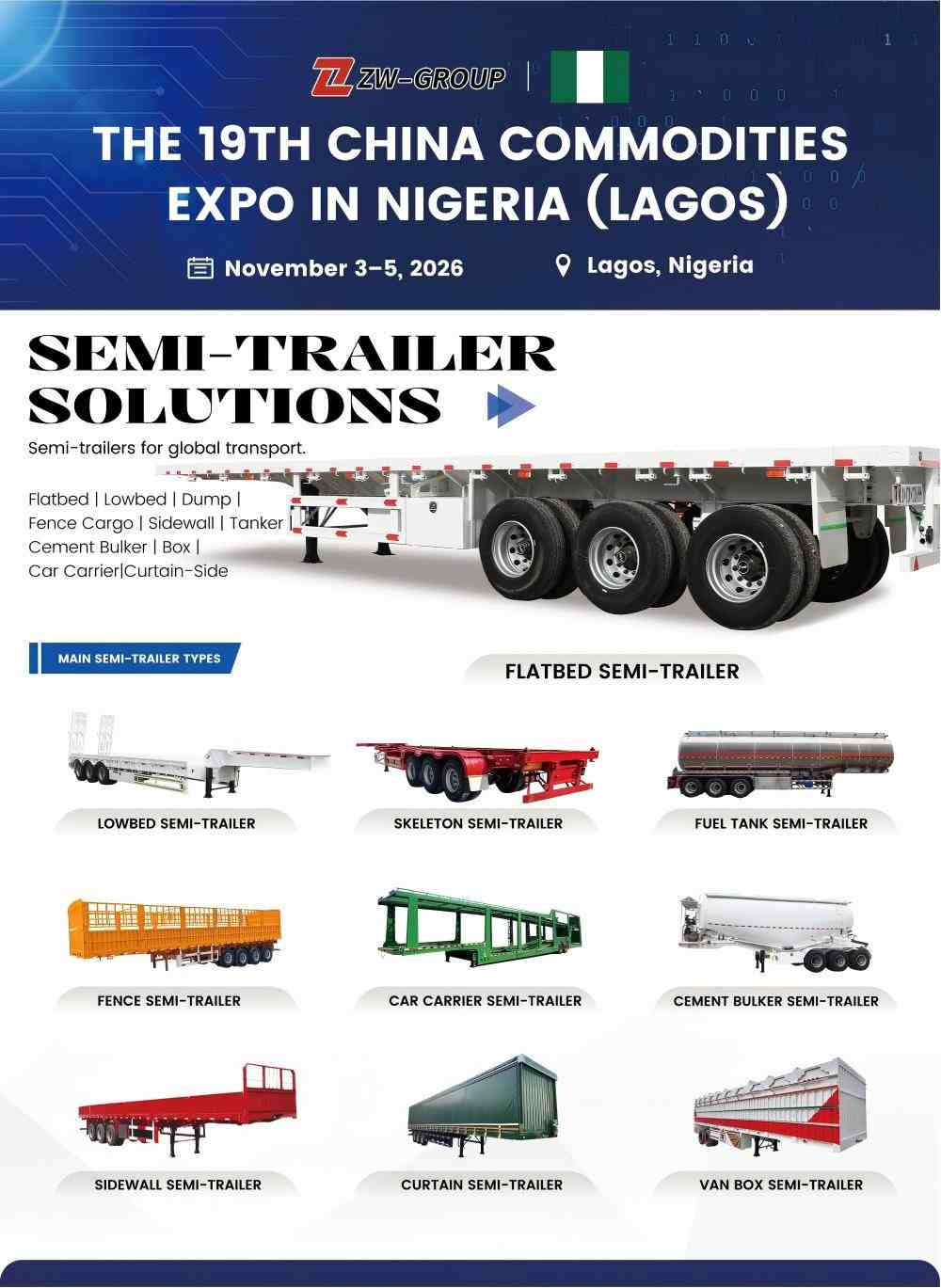
Image placeholder: insert a real product lineup photograph showing the relevant trailer categories.
How Should You Select a Trailer for Nigerian Operations?
Start with cargo, route, loading equipment, and legal limits. Trailer selection should follow the complete operating task rather than a standard configuration chosen without supporting information.
Port and container operators often prioritise chassis strength, container compatibility, tyre availability, and axle-load distribution. Construction contractors may require a lowbed with appropriate deck height, ramp geometry, and loading capacity. Aggregate hauliers typically need a dump body and hydraulic system suited to their materials and discharge site.
For long-distance freight, tare weight and structural durability affect payload economics. However, reducing tare weight must not compromise structural integrity or legal operating limits. High-tensile steel, where specified and appropriately engineered, can help balance strength and weight. Actual performance depends on material grade, section design, welding quality, and manufacturing controls.
Suspension selection also matters. Leaf-spring and air-suspension arrangements have different operating characteristics, maintenance requirements, and application suitability. Axle ratings, braking components, tyre specifications, kingpin dimensions, fifth-wheel compatibility, and electrical connections must be checked against the intended tractor unit.
For a fuel tanker, buyers must establish the intended liquid, compartment arrangement, filling and discharge requirements, and applicable transport regulations. For a cement bulker, compressor capacity and unloading equipment compatibility can affect turnaround time at the delivery site.
ZW Group can discuss these requirements with buyers seeking a China vehicle supplier for a specific transport operation. Final specifications should be confirmed in a written technical quotation before an order is placed.
Send your trailer type, cargo, target payload, and destination to ZW Group on WhatsApp.
How Can ZW Group Help Buyers Source Heavy Trucks?
ZW Group helps overseas buyers explore new and used heavy-truck procurement options based on the intended application, vehicle condition requirements, budget, and destination market.
Demand across Nigeria and West Africa can involve port haulage, construction materials, mineral transport, agricultural logistics, infrastructure projects, and general road freight. Each application places different demands on the prime mover, drivetrain, chassis, tyres, cooling system, and braking equipment.
Which Truck Brands Can Buyers Discuss?
- HOWO: A range of heavy commercial vehicles for applications such as hauling, tractor-trailer operations, and construction transport.
- Shacman: Heavy-truck options that buyers may evaluate for demanding freight and construction duties.
- Foton: Commercial vehicle options for buyers assessing cargo transport and fleet requirements.
- FAW: Heavy and commercial vehicle options for different transport applications.
- Beiben Heavy-truck options that can be considered according to the intended duty cycle and required specification.
Availability, model year, configuration, and supply terms vary by vehicle and order. Buyers should request the exact model designation, engine rating, transmission specification, axle configuration, and production or registration details for the units under consideration.
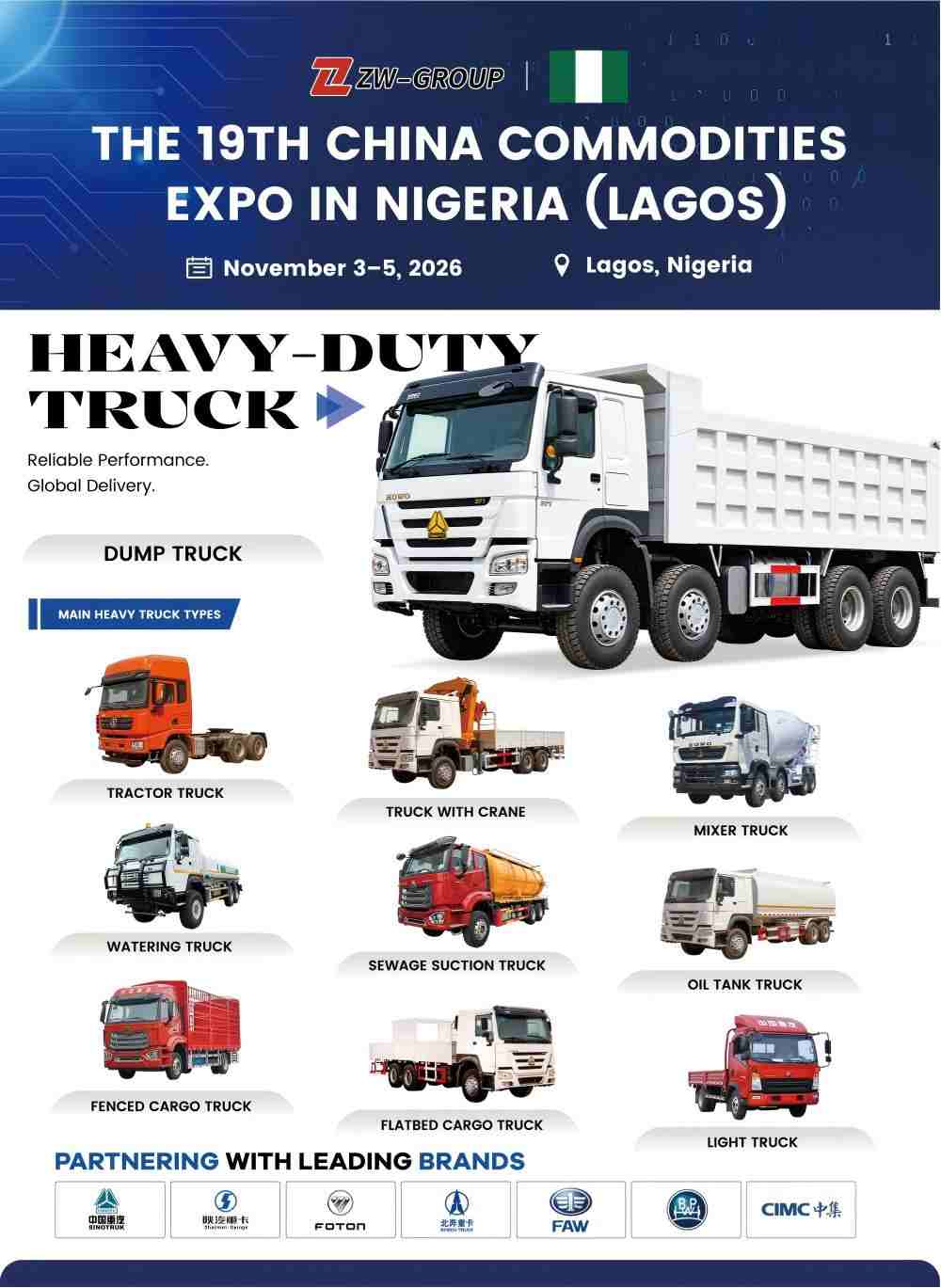
Image placeholder: replace with actual truck photographs and accurate model captions.
What Heavy-Truck Applications Can Be Discussed?
| Vehicle Type | Typical Work | Key Checks |
|---|---|---|
| Dump Truck / Tipper | Aggregate, earthmoving, quarrying, and construction materials | Engine output, axle configuration, payload, body design, and hydraulic hoist |
| Tractor Truck / Prime Mover | Container, flatbed, tanker, and other semi-trailer operations | Fifth wheel, kingpin compatibility, axle ratio, transmission, and gross combination limits |
| Concrete Mixer Truck | Concrete delivery for construction projects | Drum capacity, chassis suitability, hydraulic drive, and operating weight |
| Water Tank Truck | Construction water supply, dust control, and compatible utility applications | Tank capacity, pump and spray arrangement, chassis load, and intended use |
| Fuel Tank Truck | Fuel distribution where regulatory requirements are met | Tank configuration, safety equipment, valves, documentation, and certification |
| Cargo Truck | General goods and commercial freight | Body dimensions, axle ratings, payload, and route restrictions |
A China vehicle supplier should match the engine and drivetrain to the operating task. High engine power alone does not guarantee lower operating costs. Gear ratios, torque delivery, vehicle mass, tyre selection, road gradients, payload, and driving practices all affect fuel use and performance.
For a prime mover, the fifth wheel and trailer kingpin must be compatible. Fifth-wheel load rating, mounting position, coupling height, and overall combination geometry require verification. Differential locks may assist traction in appropriate conditions, but they do not replace correct axle loading, tyres, and safe driving procedures.
For a tipper, the hydraulic hoist, cylinder arrangement, body structure, hinge points, and subframe must suit the load and discharge environment. Buyers should confirm the rated payload and the vehicle’s legal gross and axle limits rather than relying only on body volume.
Should You Buy New or Used Heavy Trucks from China?
The right choice depends on acquisition budget, expected utilisation, downtime tolerance, and inspection evidence. New and used vehicles can both fit a procurement strategy, but their risks and cost structures differ.
| Decision Factor | New Vehicle | Used Vehicle |
|---|---|---|
| Initial Purchase | Usually requires a higher initial budget | May offer a lower entry cost, depending on condition and specification |
| Condition Assessment | Focus on specification, manufacturing quality, and pre-delivery checks | Requires careful review of wear, maintenance history, and mechanical condition |
| Maintenance Planning | Follow the manufacturer’s service schedule and specified parts requirements | Allow for condition-dependent repairs and replacement of worn components |
| Configuration | Depends on available models and confirmed order specifications | Depends on the actual vehicle offered and its existing configuration |
| Best Evaluation Method | Verify the build specification and delivery condition | Inspect the actual unit, supporting records, and test results where available |
A used truck should never be assessed solely by exterior appearance or a seller’s description. Buyers should request available chassis and engine identification details, mileage records, service history, photographs, videos, and inspection findings. Actual verification depends on the unit and the records available.
For a used dump truck, inspection should consider chassis cracks or deformation, signs of previous repairs, hydraulic leakage, cylinder condition, body and subframe wear, transmission operation, differential noise, cooling performance, and braking condition. A cylinder pressure test or other engine test may be appropriate when supported by the engine design and inspection procedure. Results should be documented rather than assumed.
For a used tractor truck, pay attention to clutch operation, gearbox performance, differential condition, fifth-wheel wear, steering play, suspension components, air-brake performance, and the condition of the engine and cooling system. A road test, diagnostic scan, or workshop inspection may be appropriate where available and safe.
Before committing funds, compare the purchase price with shipping, insurance, import duties, taxes, registration, initial maintenance, replacement parts, and any required modifications. A lower purchase price is not automatically a lower total cost of ownership.
Contact ZW Group on WhatsApp to discuss new or used truck requirements and request unit-specific information.
How Should Buyers Evaluate Vehicle Quality and Technical Specifications?
A clear technical specification and documented inspection process reduce uncertainty before export. Buyers should establish what is included in the quoted vehicle, what evidence can be supplied, and which requirements must be confirmed before shipment.
Trailer Chassis and Structural Quality
The main beam carries major structural loads and must be engineered for the intended application. Buyers should ask about the specified steel grade, beam dimensions, cross-member arrangement, welding process, surface preparation, and corrosion-protection system. High-tensile steel can support a strength-to-weight target when correctly selected and processed, but the material name alone does not establish the quality of the finished trailer.
Axle capacity must be evaluated alongside tyre ratings, suspension design, braking components, and legal load distribution. Overloading any component can increase failure risk and shorten service life. A written specification should state the axle arrangement and relevant component ratings wherever applicable.
Hydraulic Systems for Dump Applications
For a dump trailer or tipper truck, the hydraulic system must match the body geometry, rated load, and discharge procedure. Buyers should confirm the hoist type, cylinder specification, operating pressure where provided, hydraulic power source, hose routing, and maintenance access. The system should be inspected for leakage, damage, secure connections, and smooth operation under an appropriate test procedure.
Never assume a cylinder is suitable merely because it can raise an unloaded body. The working load, tipping angle, body centre of gravity, chassis stability, and ground conditions affect safe unloading. Operators should follow the equipment instructions and avoid tipping on unsuitable or unstable ground.
Prime Mover and Drivetrain Compatibility
Truck and trailer compatibility affects safety, handling, and operating efficiency. Confirm the fifth-wheel rating, kingpin specification, coupling height, trailer clearance, axle loading, electrical connections, and braking interfaces. The engine, gearbox, axle ratio, and differential configuration should be suitable for the expected combination mass, terrain, and operating cycle.
Where inter-axle differential locks are fitted, the operating instructions and engagement limitations should be understood. Differential locks can improve traction in certain conditions, but improper use on high-grip surfaces may cause drivetrain stress or handling problems.
Documentation and Pre-Shipment Verification
- Confirm the exact make, model, year, and vehicle identification details.
- Match the commercial invoice and packing information to the actual shipment.
- Review the applicable export, shipping, and destination-market documents.
- Confirm whether inspection records, photographs, videos, or test results are available.
- Check the agreed configuration against the final pro forma invoice and purchase contract.
- Clarify the allocation of responsibility for freight, insurance, customs clearance, and destination charges.
Inspection scope should be agreed before payment and shipment. A supplier should not claim a particular test, certification, or inspection result unless it has been performed and documented for the relevant unit or production batch.
How Does Vehicle Configuration Affect Operating Costs in Nigeria?
The lowest quotation is not always the lowest-cost procurement decision. Fuel consumption, tyre life, repair frequency, load utilisation, and downtime can outweigh an initial price difference over a vehicle’s working life.
Consider two hypothetical fleet procurement approaches. The comparison below illustrates decision factors; it does not represent measured ZW Group customer results.
| Procurement Approach | Possible Short-Term Result | Potential Long-Term Consequence |
|---|---|---|
| Before: Choose mainly by advertised price | Faster comparison of headline quotations | Configuration mismatch, unexpected maintenance, or higher operating costs may emerge |
| After: Match specifications to the duty cycle | More detailed technical and commercial evaluation | Better visibility into payload suitability, maintenance needs, and lifecycle cost drivers |
For a fleet working long-distance routes, a suitable powertrain and axle ratio can matter more than selecting the highest available horsepower. For quarry or construction use, chassis strength, cooling, tyres, ground clearance, and the suitability of the dump body may be more important than highway fuel economy alone.
Tyre selection should reflect axle loading, road conditions, speed, availability, and maintenance practices. A tyre specification that is difficult to replace locally can create additional downtime even if the original unit price is attractive.
Maintenance planning should include filters, lubricants, brake components, belts, hoses, lighting, electrical parts, and application-specific wear items. Buyers should identify locally available consumables and determine which specialist components may need longer procurement lead times.
For importers, stock planning also matters. Carrying too many uncommon configurations can tie up working capital and complicate after-sales support. A focused product range built around local customer demand may be easier to support than an assortment of unrelated models.
A practical China vehicle supplier discussion should therefore cover not only the vehicle itself, but also expected utilisation, maintenance capability, spare parts strategy, and the intended replacement cycle.
What Export and Customs Details Should Nigerian Importers Confirm?
Confirm destination requirements before finalising a purchase. Vehicle eligibility, documentation, import procedures, duties, taxes, inspection requirements, and port charges can change the total landed cost and the time needed to place equipment into service.
Importers should verify current requirements with the relevant Nigerian authorities, customs professionals, shipping agents, and other qualified service providers. Do not rely on a general quotation or an older shipment as proof that every vehicle configuration is currently admissible.
Questions to Resolve Before Shipment
- Vehicle eligibility: Is the vehicle type, age, specification, and intended use permitted under current destination rules?
- Documentation: Which commercial, transport, vehicle-identification, and regulatory documents are required?
- Shipping method: Is containerised transport, RoRo, or another suitable method available for the particular vehicle?
- Dimensions and weight: Do the vehicle’s dimensions and shipping weight affect freight selection or handling arrangements?
- Insurance: What cargo insurance is required, and what risks and exclusions apply?
- Customs clearance: Which party handles the clearance process, and what destination charges are excluded from the quoted price?
- Final delivery: How will the vehicle move from the port to the buyer’s premises or project site?
For a semi-trailer, shipping arrangements may depend on its dimensions, configuration, and the selected carrier’s requirements. For a complete truck, buyers should confirm whether the quotation covers the vehicle only or also includes particular shipping, insurance, handling, or delivery services.
Commercial terms should clearly identify the agreed Incoterms rule and named place or port where applicable. Buyers should also confirm payment milestones, production or preparation lead time, inspection arrangements, and the documents to be provided before shipment.
ZW Group welcomes these discussions during the Lagos exhibition. The final import decision should be based on current official requirements and a written commercial agreement that identifies each party’s responsibilities.
How Can ZW Group Support Project and Fleet Procurement?
ZW Group can discuss vehicle sourcing around a defined project, fleet plan, or distribution strategy rather than treating every inquiry as an isolated unit purchase.
For a mining or quarry operation, procurement may involve dump trucks, tractor units, lowbed trailers for equipment relocation, and support vehicles. For a logistics company, the requirement may centre on prime movers, container skeleton trailers, flatbeds, and general cargo trailers. Construction contractors may need a combination of heavy trucks, mixers, water tankers, and equipment transport solutions.
The most effective starting point is a list of the actual work to be performed. Include cargo type, payload, route length, road conditions, daily utilisation, site access, and the equipment already in the fleet. This information helps the supplier identify relevant configurations and highlight points that require further confirmation.
What Should a Fleet Procurement Brief Include?
- Destination country and intended operating location.
- Vehicle category and intended application.
- Required quantity and preferred delivery schedule.
- Payload, body volume, axle configuration, and other essential technical requirements.
- Preference for new vehicles, used vehicles, or both.
- Target purchase budget and whether freight is included.
- Maintenance resources, spare-parts expectations, and any required technical support.
- Applicable import, registration, and project compliance requirements.
For batch orders, buyers should agree on a consistent specification and identify any permitted variations between units. The purchase contract should record key configuration details and clarify the inspection, delivery, and acceptance process. This helps prevent misunderstandings when several vehicles or trailer units are involved.
For distributors, the discussion may also cover market demand, suitable product categories, model availability, and how to prioritise a manageable range. Territory exclusivity, credit terms, warranty coverage, and other special arrangements must never be assumed; they require separate written agreement.
Why Work with ZW Group as Your China Vehicle Supplier?
ZW Group’s stated business scope connects overseas customers with new semi-trailers, new and used heavy trucks, construction machinery, spare parts, and overseas customer service resources.
The company’s international business coverage includes China-based operations, an Africa-focused service team, a Middle East office, and activity in Latin American markets. These resources are intended to support discussions with transport businesses, mining companies, contractors, and project supply chains.
For Nigerian and West African buyers, the value of working with a China vehicle supplier should be evaluated through the clarity of the quotation, the relevance of the offered configuration, the quality of supporting information, and the supplier’s ability to communicate throughout the procurement process.
What Buyers Should Expect from a Professional Supplier Discussion
- A clear explanation of the offered vehicle category and specification.
- Identification of information still needed to confirm suitability.
- A transparent breakdown of included and excluded commercial items.
- Available photographs, technical documents, and inspection evidence relevant to the actual unit.
- Clear discussion of export arrangements and destination responsibilities.
- A practical channel for follow-up questions and quotation revisions.
ZW Group encourages buyers to raise difficult questions before placing an order. If a specification is not confirmed, it should be recorded as pending rather than presented as a guaranteed feature. If a used vehicle’s service history is incomplete, that limitation should be addressed during the evaluation.
This approach gives both sides a more reliable basis for a commercial decision. It also helps buyers distinguish between a low headline price and a proposal that properly reflects their operating needs.
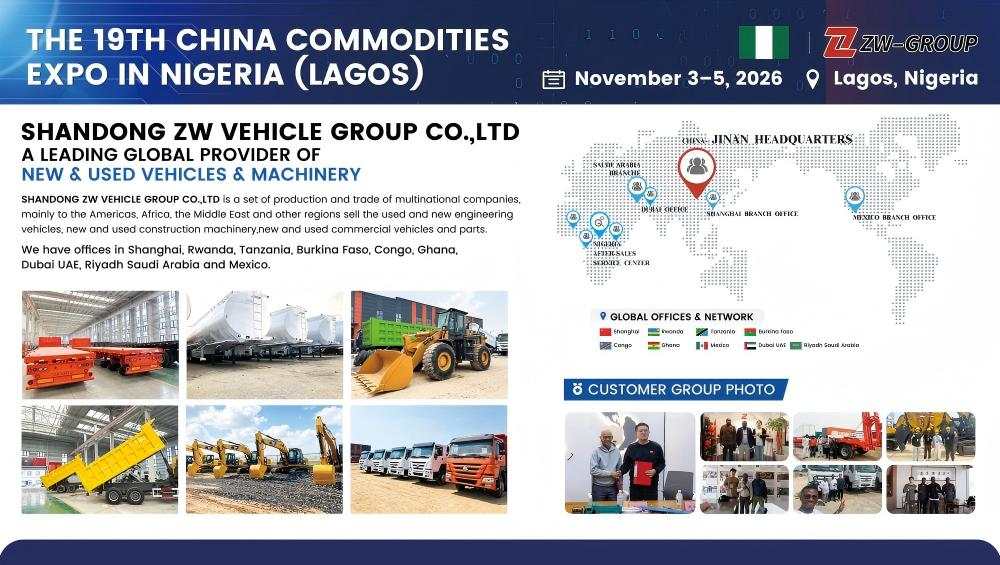
Image placeholder: insert an authentic ZW Group team or customer-meeting photograph.
Who Should Visit ZW Group at Booth 1A01?
Our exhibition team welcomes professionals involved in vehicle purchasing, import distribution, fleet management, construction, mining, and industrial transport.
- Vehicle importers: Discuss sourcing options, specifications, and shipping arrangements.
- Dealers and distributors: Explore product categories that fit your customer base and regional market.
- Fleet operators: Review truck and trailer configurations for existing or planned operations.
- Mining and quarry businesses: Discuss hauling equipment and heavy-equipment transport requirements.
- Construction contractors: Evaluate vehicle categories for material delivery, site logistics, and machinery transport.
- Project procurement teams: Align vehicle specifications, quantities, schedules, and documentation requirements.
- Established customers: Review repeat orders, additional vehicle categories, and future procurement plans.
Whether you need one vehicle or are planning a larger fleet purchase, bring your operating requirements to the discussion. Accurate specifications help both sides focus on relevant options.
How Do You Arrange a Meeting with ZW Group in Lagos?
Send your basic requirements before the exhibition so the team can prepare for a more productive conversation. A detailed technical specification is helpful, but an initial inquiry can begin with only the vehicle category, destination, and approximate quantity.
Include the following information where available:
- Your company name and business role.
- The required vehicle or trailer category.
- Quantity and preferred delivery timeframe.
- Country and intended operating location.
- Application, cargo type, or project description.
- Key technical specifications and target budget.
- Whether you need new vehicles, used vehicles, or a combination.
ZW Group can then use the information to guide the discussion toward relevant vehicle categories and commercial questions. Any final offer remains subject to confirmed availability, technical specifications, and agreed terms.
WhatsApp: +86 185 6091 3665
Website: zwgroup-vehicle.com
Exhibition: The 19th China Commodities Expo Nigeria Lagos
Date: November 3–5, 2026
Venue: Landmark Centre, Lagos, Nigeria
Booth: 1A01
Frequently Asked Questions About Choosing a China Vehicle Supplier
What products can I discuss with ZW Group at the Lagos exhibition?
You can discuss semi-trailers, heavy trucks, new and used vehicles, construction machinery, spare parts, and vehicle procurement requirements. Exact availability and configuration must be confirmed for each inquiry.
Where can I meet ZW Group in Nigeria in November 2026?
Visit Booth 1A01 at the 19th China Commodities Expo Nigeria Lagos, held at Landmark Centre, Lagos, from November 3 to 5, 2026.
Can ZW Group help me source used heavy trucks?
ZW Group’s business scope includes used heavy-truck export solutions. Ask for the specific vehicle details, condition information, available inspection evidence, and commercial terms before deciding.
Which semi-trailer is suitable for Nigerian freight operations?
The answer depends on the cargo, payload, route, loading method, tractor unit, and applicable regulations. Flatbeds, dump trailers, fence cargo trailers, lowbeds, and container skeleton trailers serve different purposes. Provide your operating details to identify suitable options.
Can I request HOWO or Shacman trucks?
Yes. HOWO and Shacman are among the truck brands buyers can discuss with ZW Group. Specify the application, axle configuration, power requirements, and whether you are seeking new or used vehicles.
What information is needed for a quotation?
Provide the product category, quantity, destination, application, key specifications, and preferred delivery schedule. For used vehicles, identify the model and condition requirements. A formal quotation depends on confirmed product details and availability.
Can ZW Group discuss bulk purchases and dealership cooperation?
ZW Group welcomes inquiries from importers, distributors, fleet operators, and project procurement teams. Order quantities, supply schedules, commercial terms, and any dealership arrangements require individual discussion and written confirmation.
Can ZW Group advise on Nigerian customs clearance?
The team can discuss export and shipping arrangements relevant to a proposed purchase. Buyers should independently verify current Nigerian import eligibility, customs requirements, duties, taxes, and registration obligations with qualified local professionals and the relevant authorities.
How can I contact ZW Group before the exhibition?
Contact the team on WhatsApp at +86 185 6091 3665 or visit zwgroup-vehicle.com. Include your product requirements and destination to make the initial discussion more efficient.
Meet Your China Vehicle Supplier in Lagos
Choosing a commercial vehicle supplier is a decision about more than equipment acquisition. It affects operating reliability, maintenance planning, cargo productivity, and the long-term economics of your fleet.
At the 2026 Lagos China Commodities Expo, ZW Group invites Nigerian and West African buyers to discuss semi-trailers, heavy trucks, construction machinery, new and used vehicle sourcing, and potential supply partnerships.
Bring your technical requirements, project details, or fleet procurement plan. Our team looks forward to discussing the practical considerations behind your next vehicle purchase.
November 3–5, 2026 · Landmark Centre, Lagos, Nigeria · Booth 1A01
ZW Group · Commercial vehicles, semi-trailers, heavy trucks, and construction machinery export solutions.