Semi Trailer Structure and Types: How to Choose the Right Trailer | ZW Group
A suitable semi trailer must match the cargo, prime mover, road conditions, loading method and legal limits of the destination market. For fleet operators, distributors and commercial vehicle buyers, understanding the main structural assemblies is the most reliable starting point for selecting a trailer that can perform its intended transport task without unnecessary maintenance or operating costs. The chassis carries and transfers loads, the cargo structure supports or contains the goods, the axle and suspension assemblies manage running loads, and the kingpin, landing gear, braking system and electrical equipment support safe operation. Specialized equipment, including hydraulic tipping systems, tank valves and container twist locks, determines how particular trailers handle their loads.
This guide explains how a semi trailer is constructed, what each major component does, how common configurations differ and which technical details buyers should confirm before placing an export order. The objective is practical: help procurement teams specify the right vehicle, compare quotations on a consistent basis and reduce the risk of purchasing equipment that does not suit local operating conditions.
Need a semi trailer configuration for your market?
Send ZW Group your cargo description, required dimensions, prime mover specifications and destination country. These details help establish a practical starting point for configuration discussions.
Discuss Your Requirements on WhatsApp1. What Are the Main Structural Components of a Semi Trailer?
A semi trailer is an articulated commercial vehicle designed to carry part of its total operating load through its own running gear while transferring a portion of the load through the fifth-wheel connection to the towing tractor. Its precise load distribution depends on the cargo position, chassis geometry, axle arrangement and coupling location. The principal assemblies are the chassis frame, cargo-carrying structure, running gear, coupling and parking equipment, braking and electrical systems, and any specialized operating mechanisms.
1.1 How Does the Semi Trailer Chassis Carry Loads?
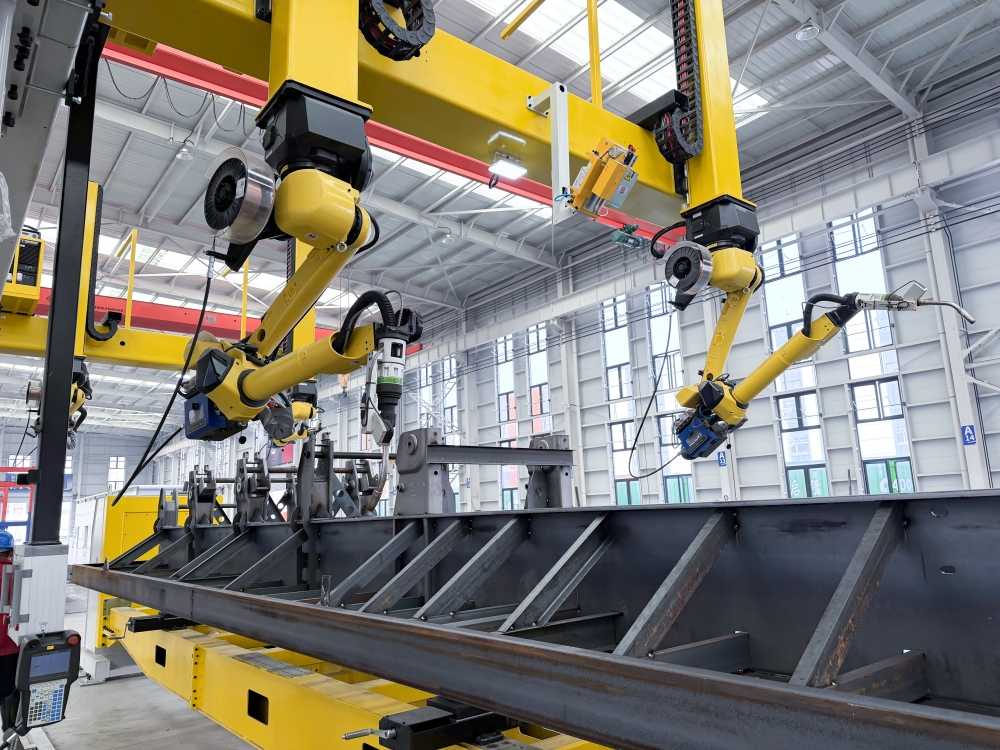
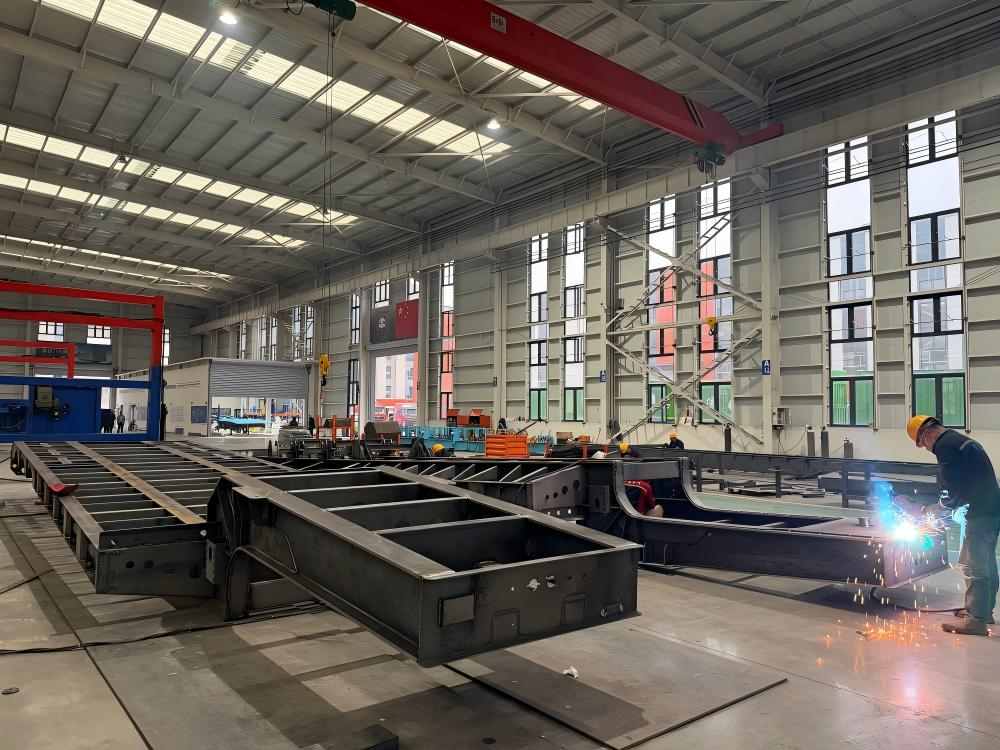
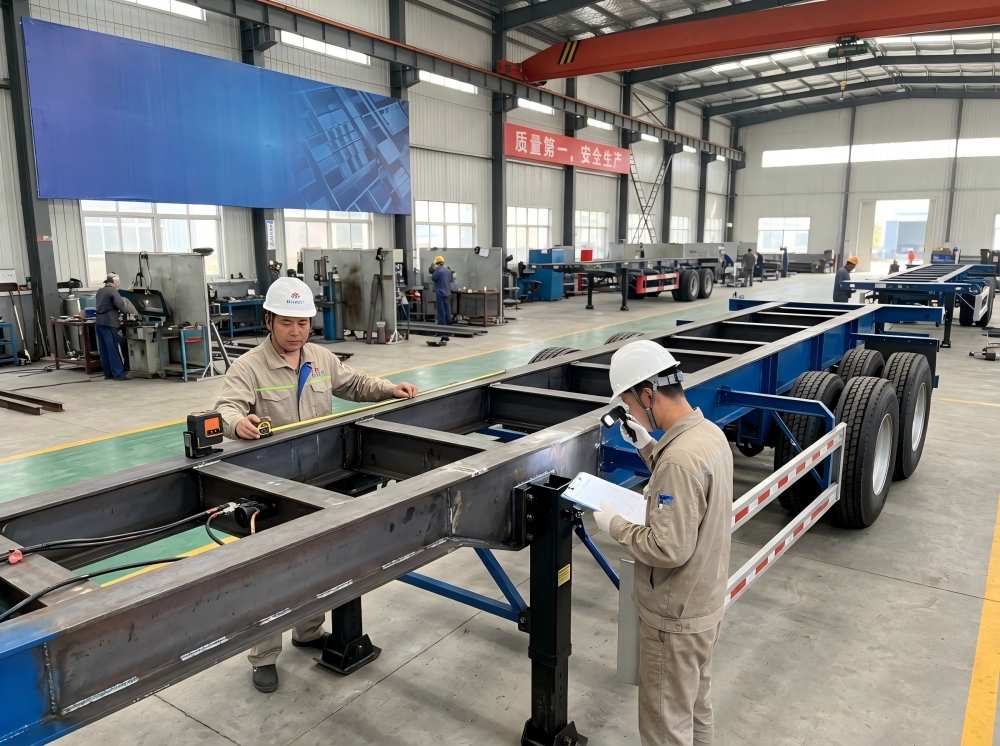
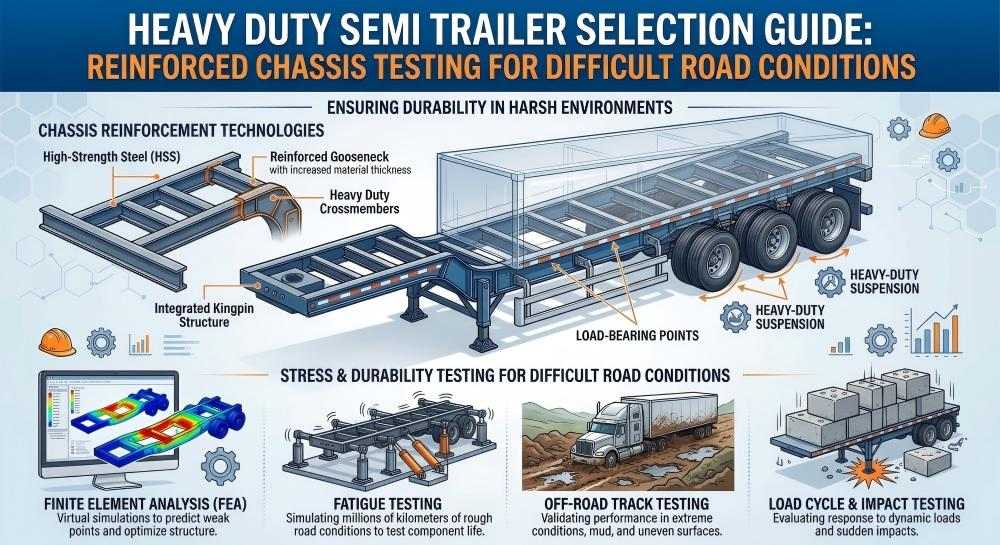
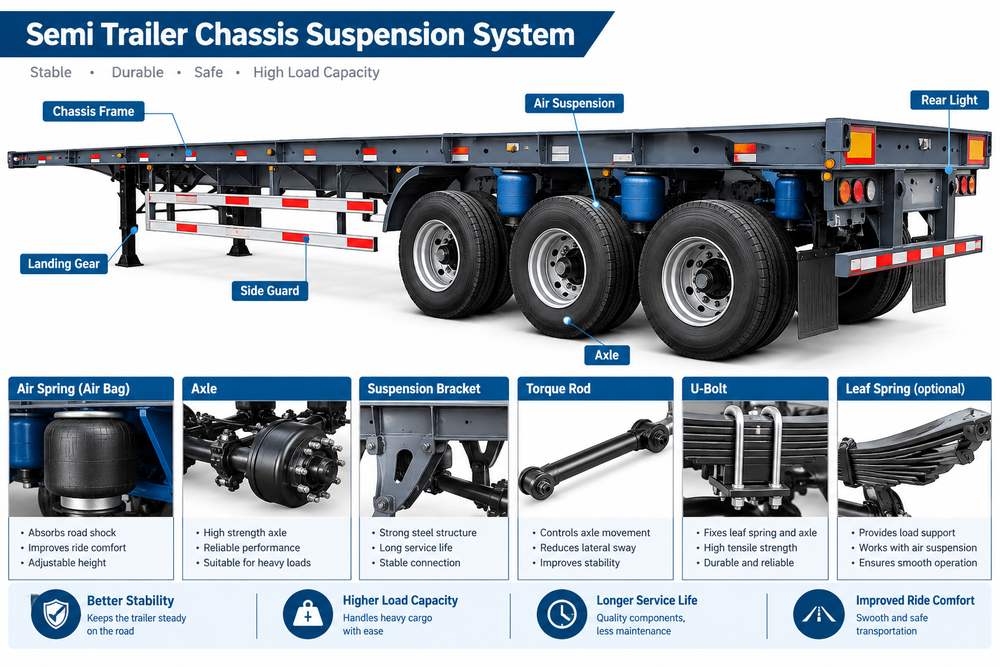
The chassis frame is the primary load-bearing structure. It normally consists of longitudinal main beams, crossmembers, connecting plates, mounting brackets and other reinforcing elements. Together, these components resist bending and torsional loads and transfer forces toward the axle group and the tractor coupling point.
When evaluating a semi trailer chassis, buyers should examine the complete structural design rather than judge capacity by the apparent thickness of the main beams. Beam section geometry, steel grade, plate thickness, reinforcement arrangement, weld quality, load distribution and manufacturing consistency all influence structural performance. A heavier frame is not automatically a better investment if its additional mass reduces payload without providing a justified operational benefit.
High-tensile steel may be suitable for particular frame designs, but a steel grade alone does not establish the permissible payload or fatigue life of the complete vehicle. The relevant material specification, design calculations, manufacturing procedures and applicable inspection requirements must correspond to the intended duty.
1.2 What Determines the Cargo Structure?
The cargo-carrying assembly is the part that directly supports, contains or secures the goods. Depending on the application, it can be an open flatbed, a side-wall body, a box body, a container-carrying frame, a tipping body, a tank or a low-height equipment platform.
Its design determines loading access, cargo protection, usable dimensions, restraint options and unloading arrangements. A flatbed provides open access from several directions, while an enclosed body protects goods from weather exposure. A dump body incorporates a tipping mechanism, and a tanker requires a vessel and associated equipment suitable for its specified medium. Selecting the correct cargo structure is therefore a functional decision, not simply a matter of appearance.
1.3 How Do Axles and Suspension Affect Operation?
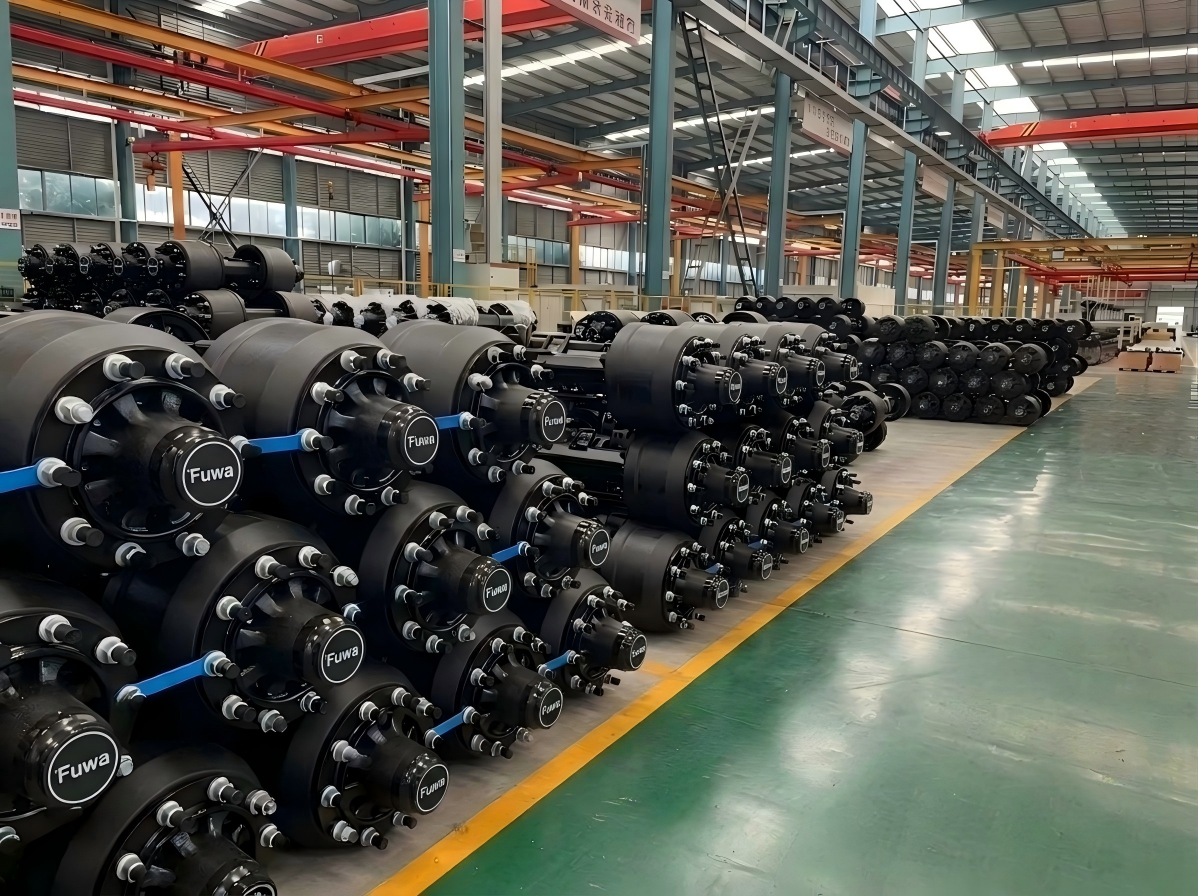
The running gear generally includes axles, suspension, wheels, tires and associated mounting hardware. These components support the trailer’s share of the load, influence tire contact with the road and affect vibration, handling and maintenance requirements.
Leaf-spring suspension is commonly considered for applications where mechanical simplicity and straightforward servicing are priorities. Air suspension may be appropriate where ride characteristics, cargo sensitivity or other operating requirements justify it. The correct choice depends on the actual route, load profile, maintenance resources, cost and destination-market requirements.
Adding axles does not automatically authorize a higher payload. Individual axle limits, axle spacing, gross combination mass, road restrictions and registration requirements remain relevant. A buyer should confirm the permitted operating weights before specifying the axle group.
1.4 Why Are the Kingpin and Landing Gear Important?
The kingpin connects the semi trailer to the tractor’s fifth wheel. The kingpin specification, mounting structure and fifth-wheel configuration must be compatible in dimensions, rated capacity and operating condition. Inspection should include abnormal wear, cracks, deformation, loose fasteners and correct locking engagement.
Landing gear supports the uncoupled trailer and provides clearance for coupling and uncoupling operations. Its capacity, mounting arrangement, operating mechanism and ground clearance should suit the loaded or unloaded support condition specified by the manufacturer. Incorrect operation or inadequate ground support can create serious stability risks during parking and loading.
1.5 Which Systems Support Safe and Specialized Operation?
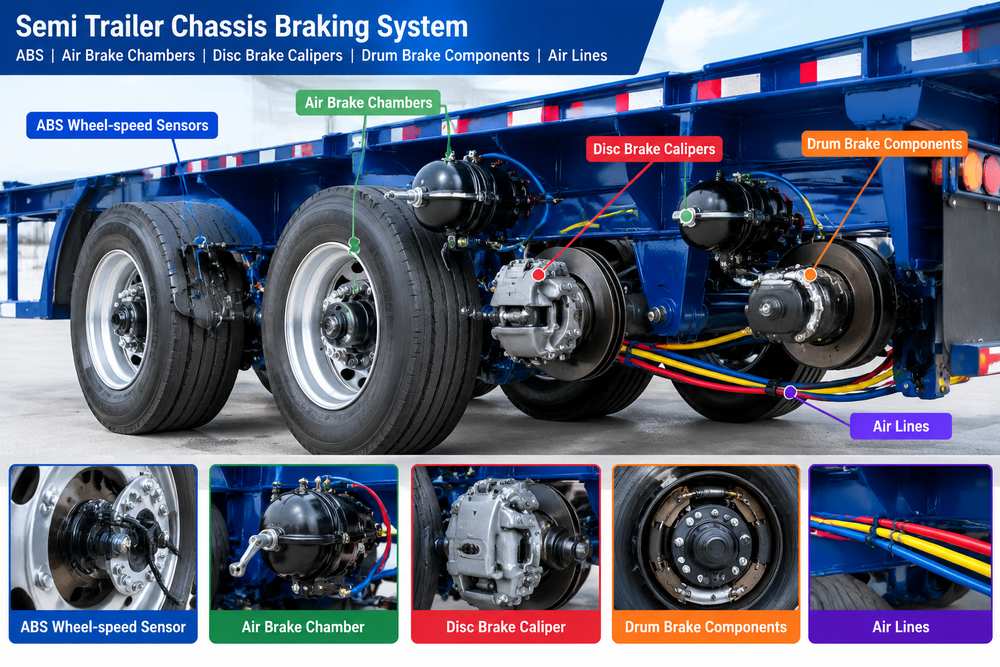
The braking system provides the required braking function for the articulated vehicle combination. Depending on the design and destination requirements, equipment may include air brake chambers, service and parking brake components, ABS wheel-speed sensors and associated control equipment. Lighting and electrical systems provide road signals, illumination and power for compatible accessories.
Specialized semi trailer configurations may also use hydraulic cylinders, pumps, hoses, valves, container twist locks, tank valves, discharge pipelines, tarpaulin mechanisms or removable loading ramps. These features add functional capability, but they also introduce inspection, maintenance, training and spare-parts requirements. Buyers should confirm the actual supply scope and connection interfaces rather than assume that every accessory is included in the base quotation.
| Assembly | Primary function | What buyers should verify |
|---|---|---|
| Chassis frame | Carries and transfers structural loads | Design, material specification, reinforcement and manufacturing quality |
| Cargo structure | Supports, contains or protects goods | Dimensions, loading access, restraint points and cargo compatibility |
| Axles and suspension | Support running loads and manage road contact | Axle ratings, spacing, suspension type and serviceability |
| Kingpin and landing gear | Connect to the tractor and support uncoupled operation | Fifth-wheel compatibility, rated capacity and operating condition |
| Brakes and electrical equipment | Provide braking, signaling and lighting functions | System compatibility, applicable regulations and replacement parts |
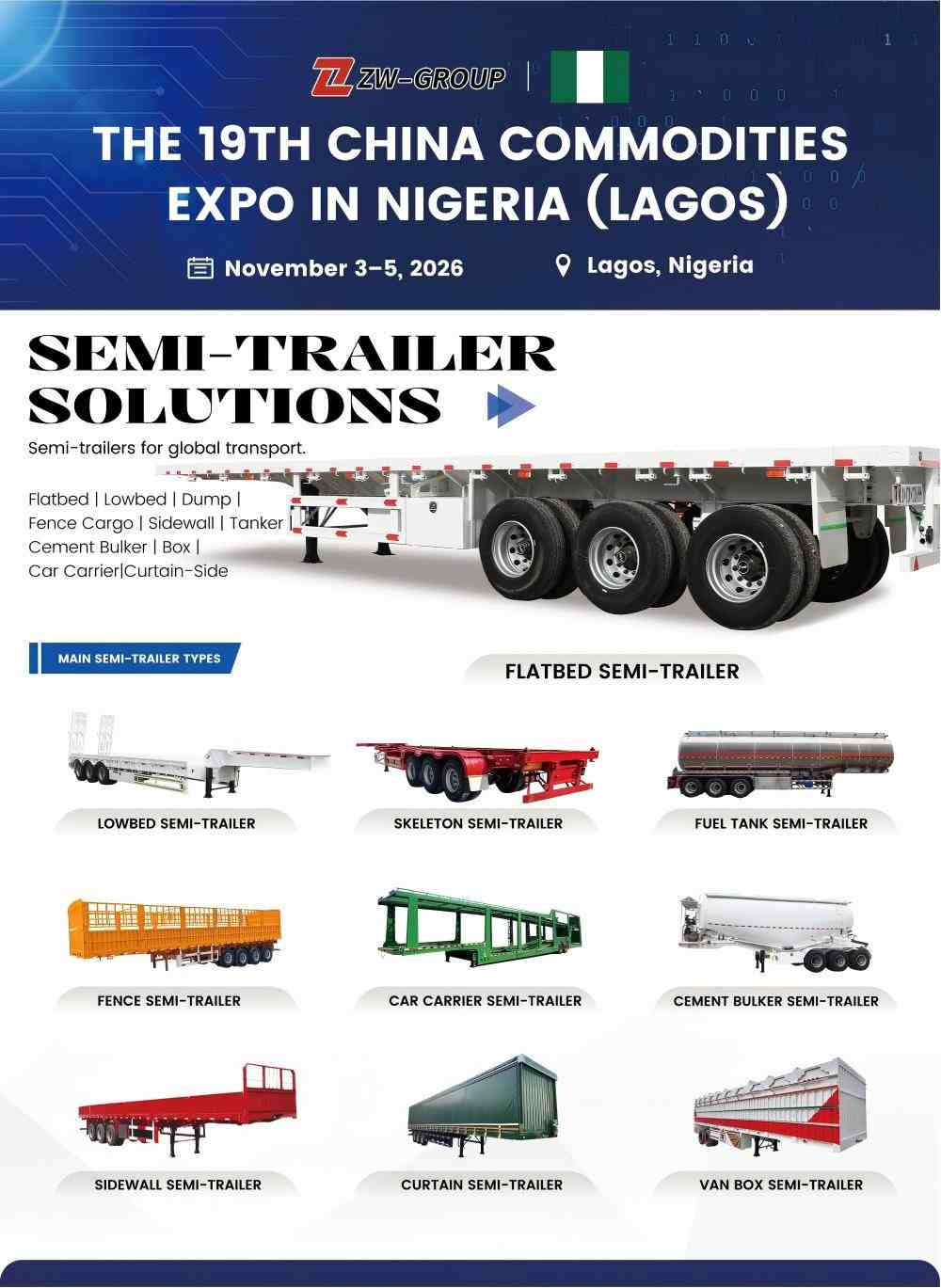
2. Which Semi Trailer Types Are Suitable for Different Cargo?
The best semi trailer type is the one that accommodates the physical characteristics of the cargo and the actual loading and delivery process. Buyers should start with cargo dimensions, weight, density, packaging, loading equipment, unloading location and route restrictions. Industry labels alone do not establish whether a particular configuration will work.
2.1 When Should You Choose a Flatbed Semi Trailer?
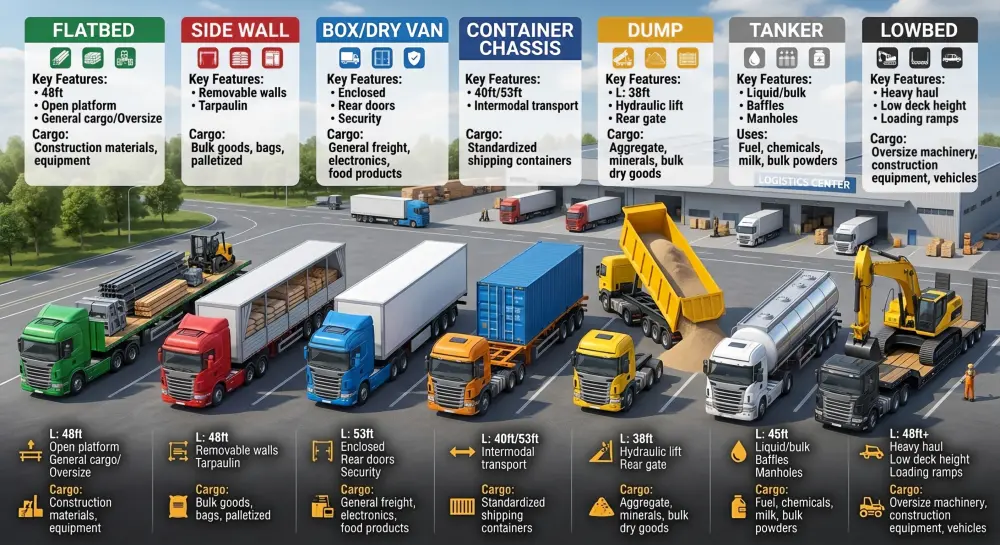
A flatbed semi trailer is suitable for cargo that can be supported on an open deck and secured with an appropriate restraint system. Typical examples include steel products, timber, palletized goods, building materials and some industrial equipment.
Its open design can simplify top loading, side loading and access by cranes or forklifts, subject to the site layout and equipment used. However, the absence of fixed side walls means cargo restraint must be planned carefully. Buyers should assess deck dimensions, floor construction, lashing points, load distribution and the intended method of securing each cargo category.
Long steel products and machinery may require different restraint arrangements even when their total weights are similar. The deck must support the actual contact loads, while tie-down equipment must be appropriate for the cargo geometry and applicable securement rules.
2.2 How Does a Side Wall or Stake Semi Trailer Improve Cargo Handling?
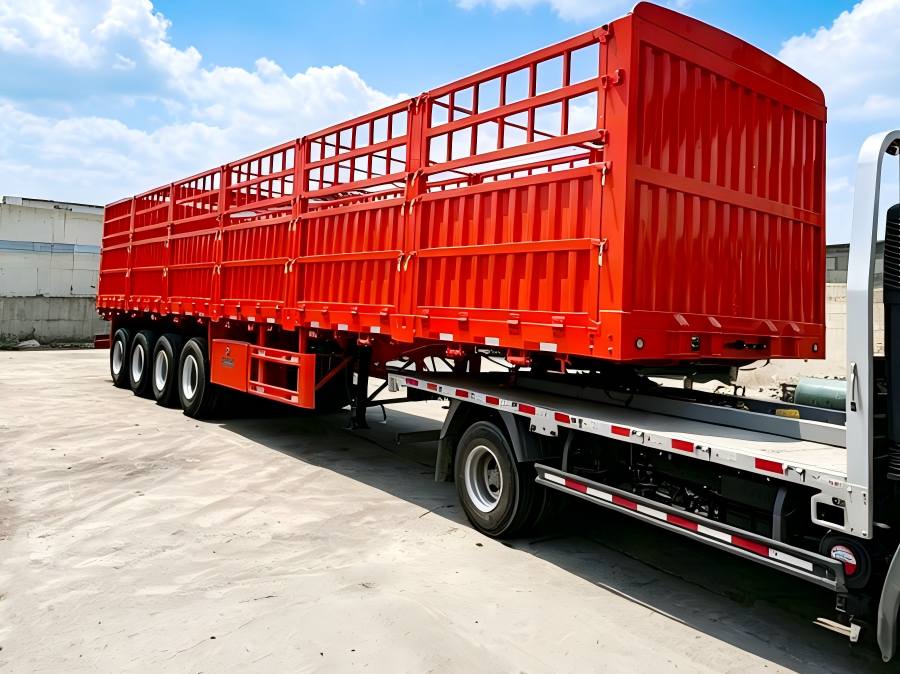
A side wall or stake semi trailer is designed for general cargo that benefits from lateral boundaries or a particular containment arrangement while retaining flexible loading access. Depending on the construction, it may suit bagged goods, palletized products, agricultural supplies, building materials and mixed commercial freight.
The height and configuration of the side walls or stakes should correspond to the cargo dimensions and the intended loading method. Removable or adjustable elements may provide operational flexibility where the design permits them, but buyers should verify the actual construction instead of assuming that every side wall trailer has interchangeable panels.
Side walls are not a substitute for proper load restraint. The buyer must establish whether the structure is intended to contain the cargo, support a particular loading arrangement or provide additional protection. Loose goods may require packaging, covers or other measures to prevent loss during transport.
2.3 What Should You Check Before Buying a Box Semi Trailer?
A box semi trailer is appropriate for cargo that needs an enclosed transport space, such as goods requiring protection from rain, road dust or uncontrolled external access. It may be used for packaged products, consumer goods, cartons and other freight suited to the available internal dimensions.
The decisive measurements are usable internal length, width and height, door opening dimensions, floor load capacity and the clearance needed for pallets or handling equipment. Nominal exterior dimensions do not tell the buyer how much cargo can actually be loaded.
For forklift loading, check the floor design, door access, turning space and loading dock arrangement. For goods that need segregation, confirm the available internal configuration and cargo restraint points. Enclosure alone does not guarantee a particular level of temperature control, waterproofing or security; any such requirement must be specified and verified separately.
2.4 How Do You Select a Container Chassis Semi Trailer?
A container chassis semi trailer transports containers through dedicated mounting points and locking devices. It is suitable for containerized freight moving between ports, terminals, warehouses, distribution centers and inland destinations.
Before purchasing, confirm the container sizes and configurations to be carried, the position and compatibility of the twist locks, axle arrangement, tractor coupling and route-specific height and weight restrictions. Do not assume that a chassis configured for one container arrangement will accommodate every container length or loading combination.
Operational compatibility also depends on terminal handling procedures, container lifting equipment, road access and the permitted gross weights of the vehicle combination. For fleet operators, standardizing container configurations across the fleet may simplify dispatching and maintenance, provided that the routes and cargo requirements support that decision.
2.5 When Is a Dump Semi Trailer the Right Choice?
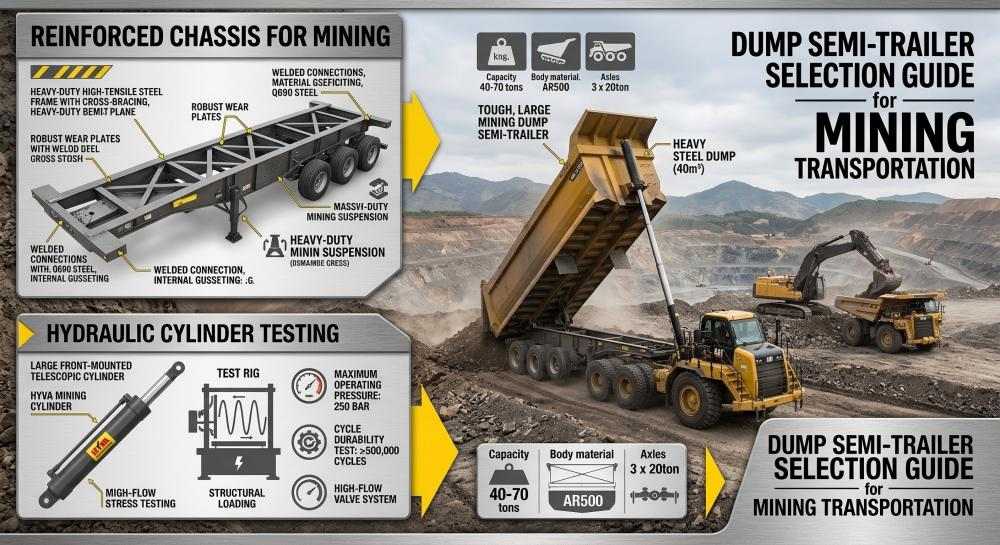
A dump semi trailer is designed to discharge suitable bulk material by raising its body or cargo container with a tipping mechanism. Common applications include sand, gravel, soil, aggregate and other materials whose physical properties allow controlled discharge.
Body volume should be selected in relation to material density and legal payload, not volume alone. A large body filled with dense aggregate may reach the permitted weight before reaching its geometric capacity. A lower-density material may fill the same body without reaching the same mass, subject to its moisture content and handling characteristics.
The hydraulic system, cylinder arrangement, body structure, hinge points and operating controls must be appropriate for the intended material and duty. Unloading conditions matter just as much as the trailer itself: soft ground, cross slopes, overhead obstructions and uneven material distribution can increase tipping risks. The operator must follow the manufacturer’s procedures and use a suitable unloading surface.
Specify the tipping system before comparing quotations.
Confirm the intended material, target body volume, expected operating loads, hydraulic interfaces and service arrangements. The correct configuration depends on the complete operating system rather than the cylinder alone.
Ask About Dump Semi Trailer Specifications2.6 What Makes a Tanker Semi Trailer Different?
A tanker semi trailer carries liquids, powders or other specified materials in a vessel designed for the intended medium and operating conditions. The correct configuration depends on the cargo’s chemical properties, density, temperature requirements, cleaning procedures, discharge method and applicable transport regulations.
Tank material, internal arrangement, valves, pipelines, access equipment and discharge interfaces must be considered as a system. Compatibility cannot be established simply because two tankers have similar external shapes. A vessel suitable for one liquid may be unsuitable for another because of material compatibility, pressure requirements, contamination risks or regulatory restrictions.
For powder tankers, buyers should pay particular attention to the intended bulk material, pneumatic discharge arrangement, air supply requirements and receiving-site connections. For liquid tankers, verify the loading and unloading interfaces, cleaning requirements and any specific safety equipment required by the cargo.
Never assume that a general-purpose tanker is approved for hazardous materials or that its design automatically meets the regulations of the importing country. The exact cargo, design specification and legal requirements must be confirmed before manufacture or shipment.
2.7 Why Choose a Lowbed or Lowboy Semi Trailer for Heavy Equipment?
A lowbed semi trailer is designed to transport machinery and equipment whose weight, dimensions or center of gravity make an ordinary flatbed unsuitable. Typical cargo includes excavators, bulldozers, loaders, road construction machinery and other heavy equipment, subject to the trailer’s design and applicable transport rules.
Platform height is an important selection factor because a lower loading height may reduce overall transport height. However, platform height must be evaluated alongside deck length, width, structural capacity, axle loading, loading ramps, tractor compatibility and route clearance.
Equipment weight alone is insufficient for specifying a lowbed. The buyer should provide the machine’s transport dimensions, operating or transport weight, track or wheel configuration, ground clearance and loading requirements. The machine’s center of gravity and position on the deck affect load distribution and stability.
Where a detachable gooseneck or removable loading arrangement is required, confirm the specific coupling mechanism, loading procedure, ramp arrangement and tractor compatibility. Oversize or overweight movements may require permits, escorts or route assessments. Trailer selection does not remove those obligations.
2.8 How Should You Evaluate Curtain-Side and Other Specialized Trailers?
Curtain-side and other specialized semi trailers serve transport operations that depend on particular access arrangements or cargo-handling methods. Curtain-side bodies can provide practical side access for compatible palletized freight, while other specialized designs may incorporate removable structures, dedicated loading equipment or cargo-specific restraints.
The main question is whether the body and access system fit the real loading workflow. Buyers should examine forklift access, available working space, cargo protection, floor loading requirements, restraint arrangements and the maintenance capability available at operating locations.
Specialized equipment is valuable when it removes a genuine handling constraint. If the operation rarely uses the feature, its added cost, weight, inspection needs and potential downtime should be considered before it becomes part of the specification.
3. How Can You Compare Semi Trailer Types Before Purchasing?
A consistent comparison should use the same cargo, operating route, loading process and legal constraints for every candidate. The following table provides a starting point for shortlisting the appropriate semi trailer configuration.
| Trailer type | Typical application | Key specification checks | Main limitation to consider |
|---|---|---|---|
| Flatbed | Steel, timber, machinery and palletized freight | Deck size, floor loading, tie-down points | Requires suitable cargo protection and restraint |
| Side wall or stake | General cargo and goods needing lateral containment | Wall height, cargo dimensions, loading access | Wall configuration may not suit every load |
| Box | Packaged goods requiring enclosure | Internal dimensions, doors, floor capacity | Access and cargo dimensions are constrained |
| Container chassis | Intermodal container transport | Container compatibility, twist locks, route limits | Limited to compatible container arrangements |
| Dump | Suitable bulk materials and earthworks | Body volume, payload, hydraulics, unloading conditions | Tipping requires a suitable operating surface |
| Tanker | Specified liquids, powders or other compatible media | Medium compatibility, vessel design, valves, regulations | Cargo-specific design and cleaning requirements |
| Lowbed | Heavy machinery and oversized equipment | Deck height, axle loading, ramps, route clearance | May require permits and specialized route planning |
| Curtain-side | Compatible palletized and general freight | Side access, curtain system, floor and restraint design | Cargo protection depends on the actual body design |
The table is intended to identify the most relevant questions, not to establish universal payload figures. Rated capacity, dimensions, equipment and legal operating limits vary by configuration and destination. A technically sound quotation should identify the proposed specification clearly enough for the buyer to compare it with alternative offers.
4. How Do Cargo Density, Payload and Body Volume Affect Trailer Selection?
Payload planning must consider both the physical volume of the cargo and its mass. For bulk materials, the basic relationship is that cargo mass equals material density multiplied by occupied volume. If the cargo is relatively dense, the legal payload may be reached before the body is full. If the cargo is less dense, the available body volume may become the limiting factor first.
For example, a buyer comparing dump bodies should not choose the largest available volume without identifying the expected material. Sand, gravel, soil and other bulk products can differ substantially in density and moisture content. Actual loading patterns can also leave unused space or create uneven weight distribution.
For palletized or packaged goods, the decisive factor may instead be floor space, stack height, door dimensions or the permitted distribution of weight across the deck. For heavy machinery, concentrated contact loads and center-of-gravity position can matter more than the nominal platform area.
Before approving a cargo capacity specification, confirm:
- Expected cargo mass and physical dimensions.
- Material density, moisture variation and loading pattern, where applicable.
- Permitted payload and gross combination mass on the intended route.
- Axle loads, axle spacing and the distribution of load between the tractor and trailer.
- Deck, floor or body capacity for the actual contact and loading conditions.
- Space required for securing, handling and unloading the cargo.
These checks help avoid a common purchasing mistake: comparing semi trailer quotations by body volume or advertised capacity while overlooking the constraints that determine usable payload in service.
5. Why Must the Semi Trailer Match the Prime Mover?
A semi trailer and its tractor must operate as a compatible vehicle combination. Matching the kingpin and fifth wheel is only one part of the process. The tractor’s permitted towing capacity, axle ratings, coupling height, braking interfaces, electrical connections and operating configuration must also be suitable for the intended trailer and cargo.
A prime mover with sufficient engine power may still be unsuitable if its permitted combination mass, fifth-wheel rating or axle loading does not support the proposed application. Similarly, a trailer with an appropriate nominal payload may exceed road or registration limits when coupled to a particular tractor and loaded in a particular way.
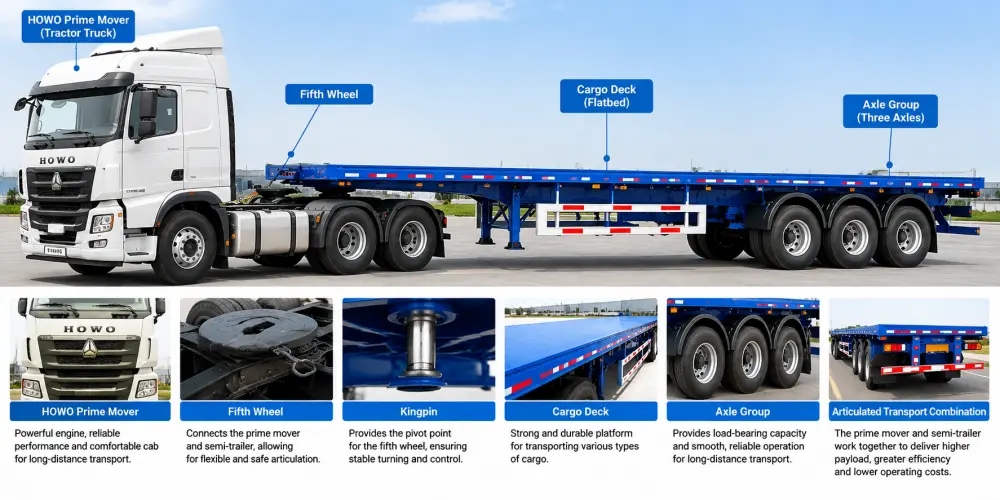
Before finalizing the order, provide the supplier with the prime mover make and model, relevant coupling specifications, intended cargo weight, expected route and any applicable local limits. Where the fleet operates several tractor models, the buyer should identify whether the trailer must be compatible with all of them or with a designated tractor configuration.
Braking and electrical compatibility also require attention. Confirm the required connection standards, control equipment, lighting arrangement and any additional systems mandated by the importing market. The exact requirements should be established from the tractor and trailer technical documentation and applicable regulations.
6. How Should Buyers Specify a Semi Trailer for Export?
A complete export specification reduces the risk of receiving a vehicle that meets the general product description but does not match the buyer’s operating requirements. Procurement teams should prepare a written requirement sheet before requesting final quotations, especially when several suppliers offer different standard configurations.
Step 1: Define the Cargo and Transport Task
Identify the material or goods, typical load dimensions, maximum intended cargo mass, loading equipment, unloading method and route conditions. If the fleet carries different cargo categories, explain which loads are routine and which are occasional. A multi-purpose requirement may call for a different design from a dedicated single-cargo operation.
Step 2: Confirm Dimensions and Legal Requirements
Specify required overall dimensions, useful deck or body dimensions, target platform height and relevant clearance restrictions. Confirm the applicable axle-load, gross-weight, width, height and length limits for the destination market and planned routes. Where special permits or technical approvals may be required, establish the applicable process before finalizing the configuration.
Step 3: Identify Major Components and Interfaces
Document the intended axle arrangement, suspension type, braking configuration, kingpin and fifth-wheel compatibility, landing gear and tire requirements. For specialized trailers, add the exact hydraulic, pneumatic, electrical or cargo-handling interfaces required for the operating system.
Step 4: Confirm Manufacturing and Inspection Scope
Ask the supplier to identify the agreed materials, component specifications, drawings and inspection records that apply to the order. Clarify what documentation will be supplied, which checks will be performed, how deviations are handled and which acceptance criteria govern delivery. Do not treat general promotional statements as substitutes for an agreed inspection scope.
Step 5: Verify Shipping and Import Arrangements
Confirm the shipment configuration, dimensions and weight information needed for freight planning, as well as the commercial documents and import requirements applicable to the destination. Depending on the shipment, relevant documents may include the commercial invoice, packing list, transport document, certificate of origin or technical documents required by the importing authority. The actual requirements vary by destination, product classification and transaction terms.
Agree on delivery terms, payment milestones, lead-time assumptions, spare-parts arrangements and responsibilities for export and import formalities. If the semi trailer requires local registration or approval, establish which documents the supplier can provide and which actions remain the responsibility of the importer.
Semi Trailer RFQ Checklist
Use the following list when preparing a request for quotation.
- Destination country and intended operating region.
- Trailer type and cargo description.
- Required dimensions, payload target and legal weight limits.
- Prime mover details and fifth-wheel specifications.
- Axle, suspension, braking and tire requirements.
- Body material, structural features and cargo restraint needs.
- Specialized equipment and required operating interfaces.
- Inspection criteria, documentation and acceptance requirements.
- Delivery terms, spare parts and after-sales support expectations.
7. What Should You Inspect Before Accepting a Semi Trailer?
Acceptance inspection should be based on the agreed specification and documented criteria rather than a general visual impression. A semi trailer can appear well finished while still having a mismatch in its interfaces, equipment scope or technical documentation. Inspection should therefore cover both the physical vehicle and the records needed to confirm what was supplied.
Structural and Dimensional Checks
- Compare the completed chassis and cargo structure with the approved drawings and purchase specification.
- Inspect accessible welds, joints, mounting points and structural members for visible defects or unexplained deviations.
- Verify the dimensions and mounting positions that determine loading, coupling and compatibility with the intended operation.
- Confirm that the deck, body, tank or container interfaces match the agreed configuration.
Running Gear, Coupling and Braking Checks
- Confirm the specified axle and suspension assemblies and inspect their mounting condition.
- Check the kingpin specification, accessible mounting areas, landing gear and fifth-wheel compatibility requirements.
- Verify the agreed brake components, air-line connections, electrical connectors and lighting equipment.
- Review the applicable inspection or functional-test records required by the purchase agreement.
Specialized System Checks
For a dump semi trailer, confirm that the hydraulic equipment and operating interfaces correspond to the approved specification. Any cylinder or hydraulic test should be assessed against the defined test procedure, operating conditions and acceptance criteria. A generic claim that a cylinder was tested does not establish that the complete system satisfies every possible operating requirement.
For a tanker, verify the vessel and associated equipment against the specified medium and applicable documentation. For a lowbed, check the loading arrangement, ramps or detachable components as applicable. For a container chassis, verify the specified locking devices and their positions. Every specialized feature should be inspected according to its actual function.
Documentation and Handover
Match the vehicle identification and supplied documents to the purchase order. Record any agreed deviations and outstanding items before acceptance. Where the contract requires operating instructions, maintenance information, component lists or test records, confirm that these have been provided in the agreed format.
A structured acceptance process gives the buyer a clear record of the delivered configuration. It also creates a useful baseline for maintenance, warranty communication and future spare-parts procurement.
8. How Can the Right Semi Trailer Reduce Total Operating Costs?
The economic value of a semi trailer depends on its suitability for the actual transport cycle, not just its purchase price. A lower initial quotation may be less attractive if the configuration creates loading delays, limits useful payload, requires difficult-to-source components or fails to match the fleet’s operating routes.
Buyers should compare total operating cost using a consistent set of assumptions. Relevant factors include acquisition cost, fuel-related effects of the complete vehicle combination, payload utilization, tire consumption, scheduled maintenance, unscheduled repairs, downtime, loading efficiency and expected service life. These factors should be evaluated against the same cargo task and working conditions; otherwise, a cost comparison can produce a misleading result.
| Decision area | Short-term consideration | Long-term operating implication |
|---|---|---|
| Chassis design | Purchase price and tare weight | Payload utilization, structural suitability and maintenance exposure |
| Axle and suspension | Initial equipment cost and specification | Serviceability, tire wear and compatibility with operating routes |
| Cargo structure | Body price and usable dimensions | Loading speed, cargo protection and practical capacity |
| Specialized systems | Equipment cost and installation requirements | Maintenance, spare-parts availability and downtime risk |
| Export arrangements | Freight, documents and import procedures | Delivery predictability, registration readiness and support costs |
For a fleet with frequent, repetitive loads, a dedicated configuration may improve utilization and simplify operating procedures. For a fleet handling varied cargo, a more flexible structure may be justified if it can safely accommodate the intended load types. The correct choice depends on the frequency of each transport task, the cost of changing equipment and the operational penalties associated with unused capacity.
Spare-parts planning also deserves attention. Confirm the identification of critical components, maintenance requirements and realistic supply arrangements before ordering. This is particularly important when vehicles will operate far from major service centers or in locations where specialized hydraulic, braking or suspension components are not readily available.
9. Why Work with ZW Group on Your Semi Trailer Requirements?
ZW Group provides a point of contact for buyers evaluating commercial trailer configurations for export applications. The most productive starting point is a clear technical brief: what the trailer must carry, where it will operate, which prime mover will tow it and what the destination market requires.
Rather than comparing suppliers solely on a product name or a headline payload figure, procurement teams should request a defined specification that identifies the proposed structure, running gear, coupling arrangement, braking equipment and specialized functions. Any claim concerning material grades, component brands, certifications, manufacturing capacity or inspection results should be checked against the documents applicable to the actual order.
For distributors and fleet operators, it is also useful to discuss the planned fleet mix, maintenance resources and future spare-parts needs. A configuration that fits the intended operating model can make procurement, driver training, maintenance planning and repeat ordering more consistent.
Request a Semi Trailer Configuration Review
Tell us your cargo type, destination country, target dimensions and tractor details. Include any required axle arrangement, body design, hydraulic equipment or container interface so the discussion can focus on the specifications that affect your purchase.
For the most useful initial review, share your existing technical specification or a reference configuration if available.
Contact ZW Group on WhatsApp: +861568929110610. Frequently Asked Questions About Semi Trailer Structure and Selection
What are the main components of a semi trailer?
The main components are the chassis frame, cargo-carrying structure, axles, suspension, wheels and tires, kingpin, landing gear, braking system and electrical equipment. Depending on the trailer type, additional components may include a hydraulic tipping system, tank valves, discharge pipelines, container twist locks or specialized loading equipment.
Which semi trailer type is best for general cargo?
The answer depends on the cargo and loading method. A flatbed suits cargo that can be supported and secured on an open deck. A side wall trailer adds lateral boundaries for compatible loads, while a box trailer provides an enclosed transport space. Curtain-side and other specialized designs may be preferable when side access or a particular handling process is important.
Does a thicker chassis always mean a stronger semi trailer?
No. Chassis performance depends on the complete structural design, material properties, section geometry, reinforcement, weld quality, load distribution and manufacturing consistency. Plate thickness is one factor, not a standalone measure of load capacity or fatigue life.
Does adding more axles increase the legal payload?
Not automatically. The permitted load depends on the relevant axle ratings, axle spacing, gross combination mass, road restrictions and destination-market regulations. Buyers should confirm the applicable limits for the complete vehicle combination before specifying the axle group.
How do I select the right dump semi trailer body volume?
Start with the intended bulk material, its density and moisture variation, the target cargo mass and the legal payload. Then evaluate body dimensions, the hydraulic lifting arrangement, unloading conditions and the permitted weight distribution. Body volume alone does not establish the amount of material that can be legally or safely carried.
What information is needed to purchase a lowbed semi trailer?
Provide the equipment’s transport weight, length, width, height, ground clearance, track or wheel arrangement and center-of-gravity information where available. Also identify the prime mover, required platform dimensions, loading method, axle-load restrictions and route clearance requirements. These details help determine the suitable lowbed configuration and whether special transport approvals may be necessary.
What should I confirm before importing a semi trailer?
Confirm the technical specification, vehicle identification and required documentation, destination-market approval or registration requirements, shipment arrangements, delivery terms and inspection criteria. Requirements vary by country and vehicle configuration, so the importer should establish the applicable rules before shipment.
Can one semi trailer carry several types of cargo?
Some configurations can handle multiple cargo categories, provided that each load is compatible with the deck or body, permitted payload, restraint arrangements and legal requirements. A flexible trailer is not automatically suitable for every type of freight. Tankers, dump bodies and other specialized configurations must be used within their intended design and operating conditions.
How can I check whether a semi trailer matches my tractor?
Check the kingpin and fifth-wheel specifications, tractor and trailer ratings, coupling height, axle loading, braking interfaces, electrical connections and permitted gross combination mass. Use the relevant technical documentation and destination-market requirements rather than relying only on the tractor model name.
What information should I send to ZW Group for a quotation?
Send the destination country, trailer type, cargo description, required dimensions, target payload, prime mover specifications and preferred component configuration. Add special equipment, inspection requirements, shipping expectations and any existing drawings or reference specifications. These details help establish a more precise basis for quotation and technical discussion.
Make Your Next Semi Trailer Purchase Specification-Led
The right semi trailer starts with the cargo and operating task, then moves through chassis design, body configuration, axle and suspension selection, tractor compatibility, safety equipment and destination-market requirements. Buyers who define these factors before requesting quotations can compare suppliers more accurately and reduce the risk of paying for unsuitable equipment or discovering critical incompatibilities after delivery.
Prepare your cargo details and technical requirements, then contact ZW Group to discuss a suitable export configuration.